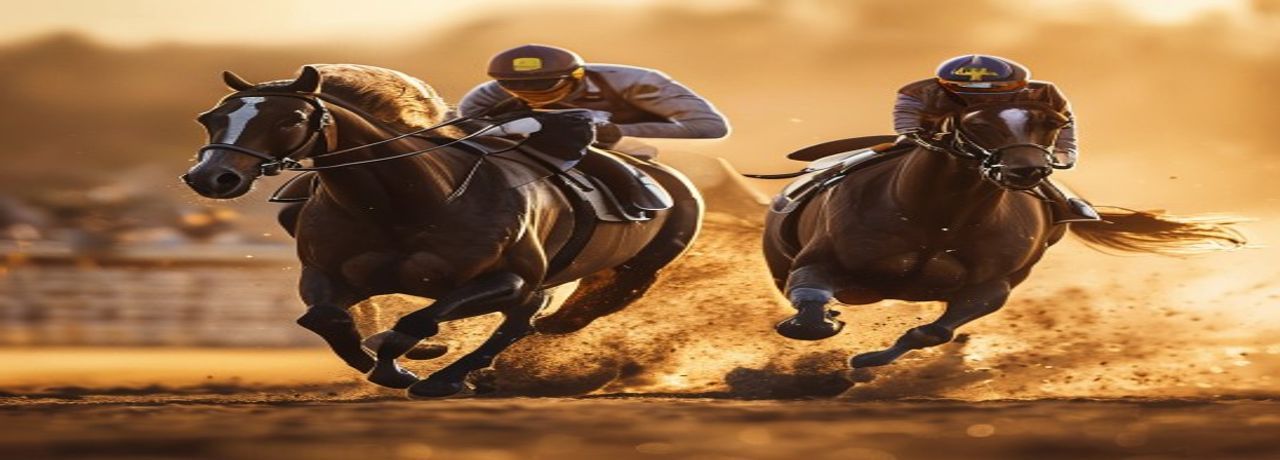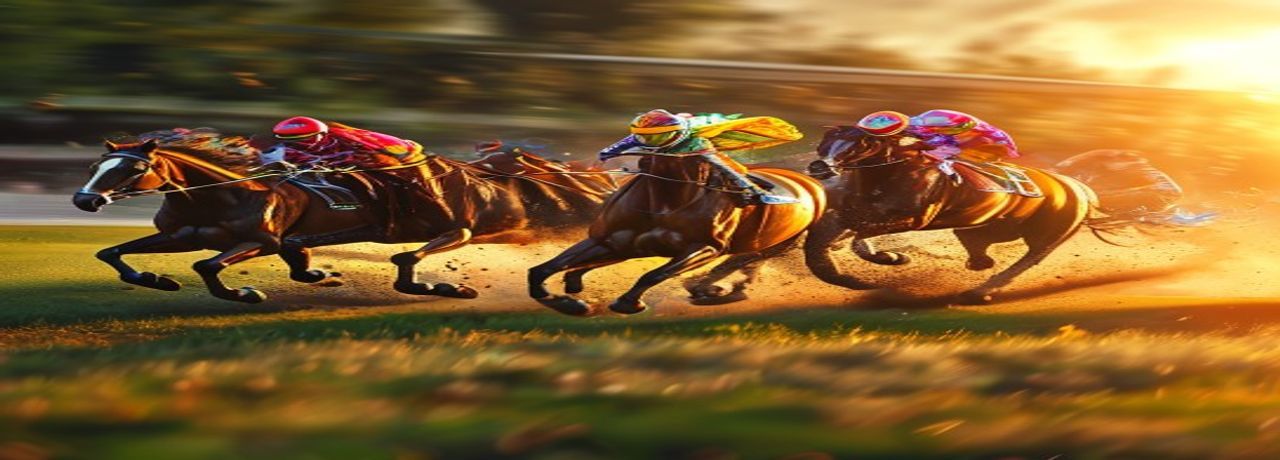
I'm not really a gambler, if I'm honest with you. I couldn't tell you the odds on tonight's football to save my life, I've never had an app on my phone, and I haven't set foot inside a bookmaker's between one April and the next for as long as I can remember. There's no betting account with my name on it, no flutter on the Lotto, nothing of the sort. But every single year, the week of the Grand National, our whole family does the very same thing we have always done — and it is, without a word of exaggeration, one of my favourite afternoons of the entire year.
It goes like this. A day or two before the race, the racing pages come out and get spread across the kitchen table on top of the oilcloth, the kettle goes on, and everybody picks a horse. Mine is almost always chosen on the name — something that reminds me of a person, or a place we once went on holiday, or just a daft word that makes me smile when the commentator says it. Sometimes I'll go on the colours of the silks, or because the jockey looks like he's got a kind face in the little photograph. It is, I freely and cheerfully admit, hardly a science. My grandson keeps trying to show me something on his phone about "form" and "going" and I tell him, very firmly, that I have been doing perfectly well without any of that for thirty years, thank you very much.
The kitchen table, the racing pages
The bet itself is always exactly the same, and that is the whole point of it. A tenner each-way — ten pounds to win, ten pounds for the horse to place — walked up to the village shop on the morning of the race and put on in person, over the counter, with the same lady who has served me for years and always asks after the grandchildren. No more than that. Not eleven pounds because I fancy one a little extra, not twenty because two of them have caught my eye. Ten each-way, full stop, the way it has been since before some of my grandchildren were even born.
And here is the lovely thing about a fixed amount like that: it turns the whole business into pure pleasure, because the cost is settled before the tape even goes up. Some years my horse comes romping over the last and there is absolute uproar round the table — shrieking, the dog barking, somebody knocking a mug of tea clean over. Most years, if I'm honest, it falls at Becher's or trails in somewhere near the back and we all fall about laughing at my hopeless eye for a runner. But here's what matters: win or lose, the afternoon costs precisely ten pounds. The result changes the noise in the room. It never changes the bill.
People assume a yearly flutter is the top of a slippery slope. I've found the opposite is true, so long as you keep the edges firm. One race, one fixed amount, one afternoon — and then nothing at all until next April.
Why the tenner never grows
I get asked sometimes — usually by someone who's surprised a sensible woman my age has a bet at all — why it has never crept up over the years. Thirty years of inflation, after all; a tenner in the early nineties would buy you a good deal more than a tenner does now. And the honest answer is that the amount was never really about the money in the first place, so there has never been any reason to change it. The ten pounds is the price of the fun, the same way you'd happily pay for a nice lunch out, or a coach trip to Llandudno, or a bunch of flowers on a Friday. You don't double the price of your lunch because last week's was especially good.
I think the trouble people get into is when the bet stops being a treat and starts being a hope — when you begin to look at it as a way of making money, rather than a way of spending a small, settled amount on an afternoon's excitement. The moment it becomes about the winning, the amount wants to grow, because a bigger stake means a bigger win, and round and round it goes. We have simply never let it get its foot in that door. The race is the entertainment. The tenner is the ticket price. There is nothing to chase, because we were never really chasing anything in the first place.
The morning ritual
The actual placing of the bet has become its own little ceremony, too. I walk up to the shop with whoever's staying — these days it's often two of the grandchildren, who get a couple of pennies on a runner of their own, just to feel part of it. We read out the names of our horses to the lady behind the counter, she writes the slips out, and we walk home swinging the little paper tickets and arguing about whose pick is going to win. That fifteen-minute walk, there and back, is worth as much to me as anything that happens during the race itself.
Frank started it all
My late husband Frank started the whole thing, back when the children were small and the Grand National was the one race the entire street stopped to watch. There was no internet then, of course — you had the telly and the paper and that was your lot. Frank would do the slips for all of us in his careful handwriting, and he took it terribly seriously in a way that was really just an excuse for the gathering. He'd have a fiver each-way himself and a tenner spread across the rest of us, and he never, ever went a penny over what he'd put aside for it. "It's the day that's the prize, love," he used to say, "not the horse."
He's been gone a good few years now, but the week of the National he is absolutely, vividly present in that kitchen — more so, in a way, than at any other time of the year. We keep a horse running for him: somebody picks one in his name, on a hunch he'd have approved of, and we cheer it home whether it comes in last or first. The grandchildren who never met him know his Grand National picks the way they know family stories, and that, to me, is worth a thousand times more than any winnings ever could be.
For us it was never really about the money, and it certainly isn't now. It's the gathering round the table, the shrieking at the telly, the little ritual that marks the proper turn of spring as surely as the daffodils.
A ritual, not a wager
That's the part I'd most want anyone reading this to understand. The bet is not the event — the bet is the excuse for the event. It's the thing that gives shape to the afternoon, that gets everyone round one table at one time, all leaning in at the same moment as the field comes thundering over the last. If we replaced the tenner each-way with a sweepstake of folded paper out of a hat, I genuinely think we'd have nearly as good a day. The horses, the cheering, the cup of tea, the daft names, the family — that's the substance. The wager is just the seasoning.
I sometimes read worrying things in the papers about how gambling has changed, how it's on people's phones now at all hours, how easy it has become to do far too much of it without ever leaving the sofa. And I do feel for anyone caught up in that, I really do, because I can see how it would creep up on a person. But it makes me grateful, too, for the small, slow, old-fashioned shape of our particular tradition: once a year, a fixed amount, in person, with the whole family in the room. There is no app nudging me to "go again", no flashing offer to double up, nothing open at two in the morning. There is just the National, the kitchen, and the daffodils coming up in the garden.
One bet a year, set budget
So that's our story, and it's a small and happy one. Thirty-odd years on, it's still a tenner each-way, still walked up to the village shop, still chosen on a name or a kind-looking jockey. It's still the best ten pounds we spend all year, and I expect it'll carry on long after I'm not the one writing out the slips. When Frank's name comes up — and it always does, the week of the National — it's over that same kitchen table, with a horse running for him too, and a room full of people who love him cheering it over the last.
✅ Why this stays healthy
Margaret's flutter works because it has firm edges: a fixed, affordable stake decided well in advance; a single occasion a year; and no urge whatsoever to top it up or "win it back". The money is treated as the price of an afternoon out, not an investment — and when the race is over, so is the betting until next spring. The "one bet a year, set budget" model is about as controlled as gambling gets: you decide what it's worth before you start, you never go over it, and you stop dead at the line. A clear budget you stick to, and a clear stop, are exactly what keep a flutter a small, warm treat rather than a creeping habit. If a bet ever stops feeling like a treat and starts feeling like a need, free and confidential help is always there — the National Gambling Helpline is on 0808 8020 133, and you can find more on our responsible gambling page.